The Rise of Remote
Even before a global pandemic forced everyone to work from home, remote work was on the rise (Felstead and Henseke, 2017). This shift brings positive changes, such as increased productivity, no commuting, and more effective meetings (Savina, 2020), but it also has issues.
Firstly, remote teams are much the same as colocated ones. The team dynamics of remote teams develop in similar ways to face-to-face teams, and the stages of the IMGD still apply (Johnson et al., 2002).
There are differences too. Leadership is more distributed in remote teams, as responsibility over the right approach is shared (Felstead and Henseke, 2017). Remote leaders should lean into this responsibility.
I rely on our team to define and implement processes along with me. This often creates better outcomes anyway since folks feel personally invested.
On the flip side, team members should be intentional and disciplined.
The success of individuals working from home relies solely on one’s ability to self-manage.
As the physical line between home and work blurs, it becomes more important to create mental boundaries instead. Schedules and goal setting can be of tremendous help to control oneself (Moran, 2020). Meetings and written communication should be deliberate and accessible (Dewey, 2020; Basecamp, n.d.). Switching off outside work is even more difficult when remote, which I talk about in the next chapter.
Remote teams are more task-focused and spend less time on social tasks and team building (Johnson et al., 2002). It's important to have fun together, and here again it helps to be deliberate. The simplest improvement is to turn on your webcam, as video improves satisfaction and negotiation (Veinott et al., 1999). Lastly, deliberate time and space for casual conversation helps prevent remote isolation tremendously (Fite, 2020).
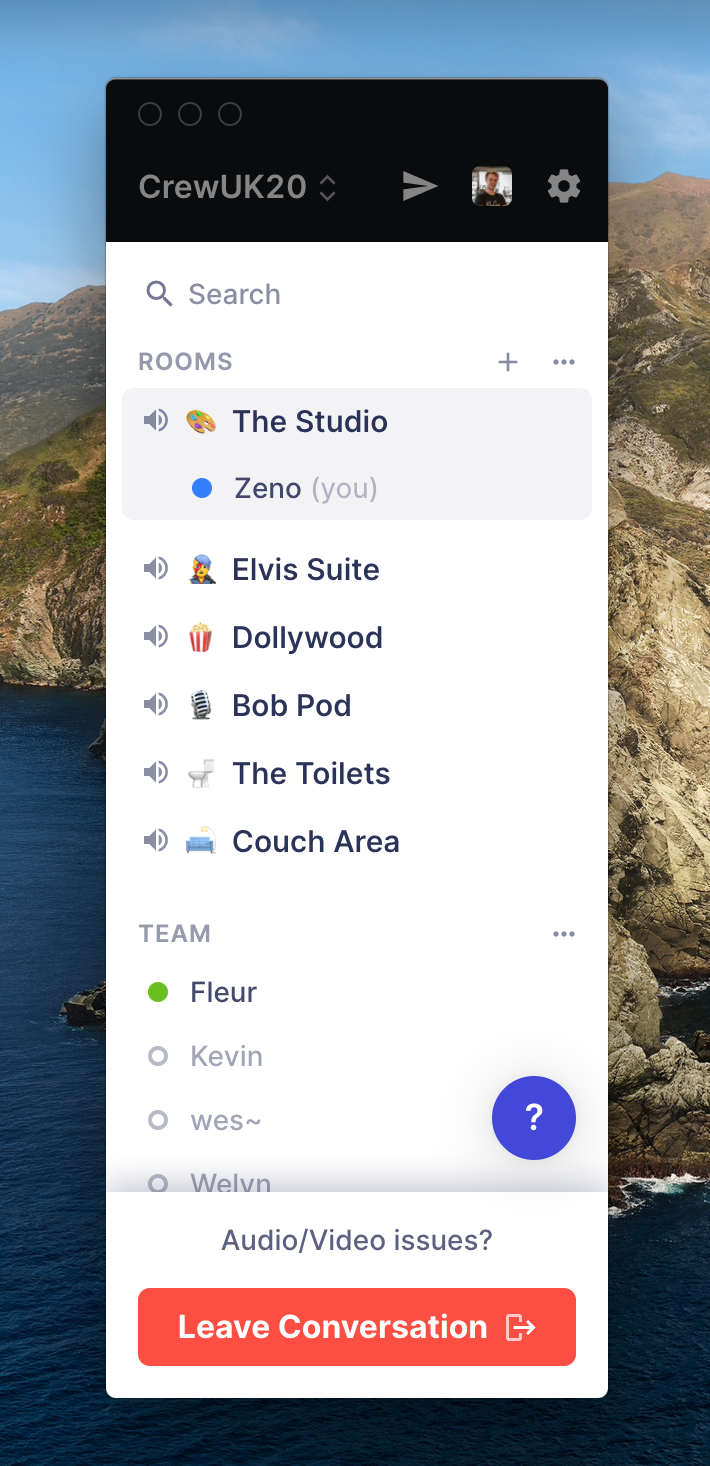
We created different rooms that mirrored the rooms of the physical studio. Now, the whole crew could get online and see that our team was discussing in one room, with other people hanging out in another. It became really easy to "bump" into each other virtually during your break, just by joining another room.
Tandem was absolutely great, but sadly not employed by the entire crew. Had it been standardised as our tool of choice, and had we organised events, then it might have prompted even more spontaneous social time.