Team Dynamics
An efficiently time-boxed project is great, but it's nothing without a well-functioning team.
"Team" can mean many different things. Susan Wheelan distinguishes (2010) work groups, which have been a part of human civilisation for centuries, from teams, which are more deliberate formations of people, who have developed shared goals and methods to accomplish those goals. Wheelan's IMGD models a group's journey towards establishing those goals and methods.
![Figure: Integrative Model for Group Development. Original by Wheelan ,[object Object]](/images/IMGD.png)
But humans have complex and varied personalities, which might make forming teams around shared goals difficult. Many frameworks for categorising personalities exist, from the widely-used MBTI (Myers & Briggs Foundation, 2019) to the SDI Triangle (Scudder, 2019). These provide a vocabulary to reason about oneself and the team, and they are very valuable for that. Unfortunately, people tend to turn their personality type into an absolute truth, and start building walls between the different personality camps. Personalities are fluid, hardly captured by strict definitions, and this practice harms collaboration in the long run.
Wheelan argues (2010) that team members don't need to have matching personalities, social time, or even like each other to form an effective team. Instead, teams should be formed based on technical skills and understanding of team dynamics.
As with project management, many frameworks exist to explain team dynamics. In the following I have summarised different theories into five best practices well-performing teams should adhere to.
Make everyone feel safe
Google found (2019) that psychological safety was by far the most important contributor to team effectiveness. Team members should feel able to safely take risks, admit mistakes, and ask questions.
Being able to share ideas leads to collective intelligence: the ideas of different minds merge into one collective. This only works if there's no seniority or superiority at play. Sawyer (2015) calls this the blending of egos.
Psychological safety can be improved by fostering a culture of inclusion and respect. People's individual differences should be embraced (Wheelan, 2010). Team members should work together to overcome differences, praise, and use feedback to help improve. In turn, leaders should make sure that feedback remains about the project, not the person.
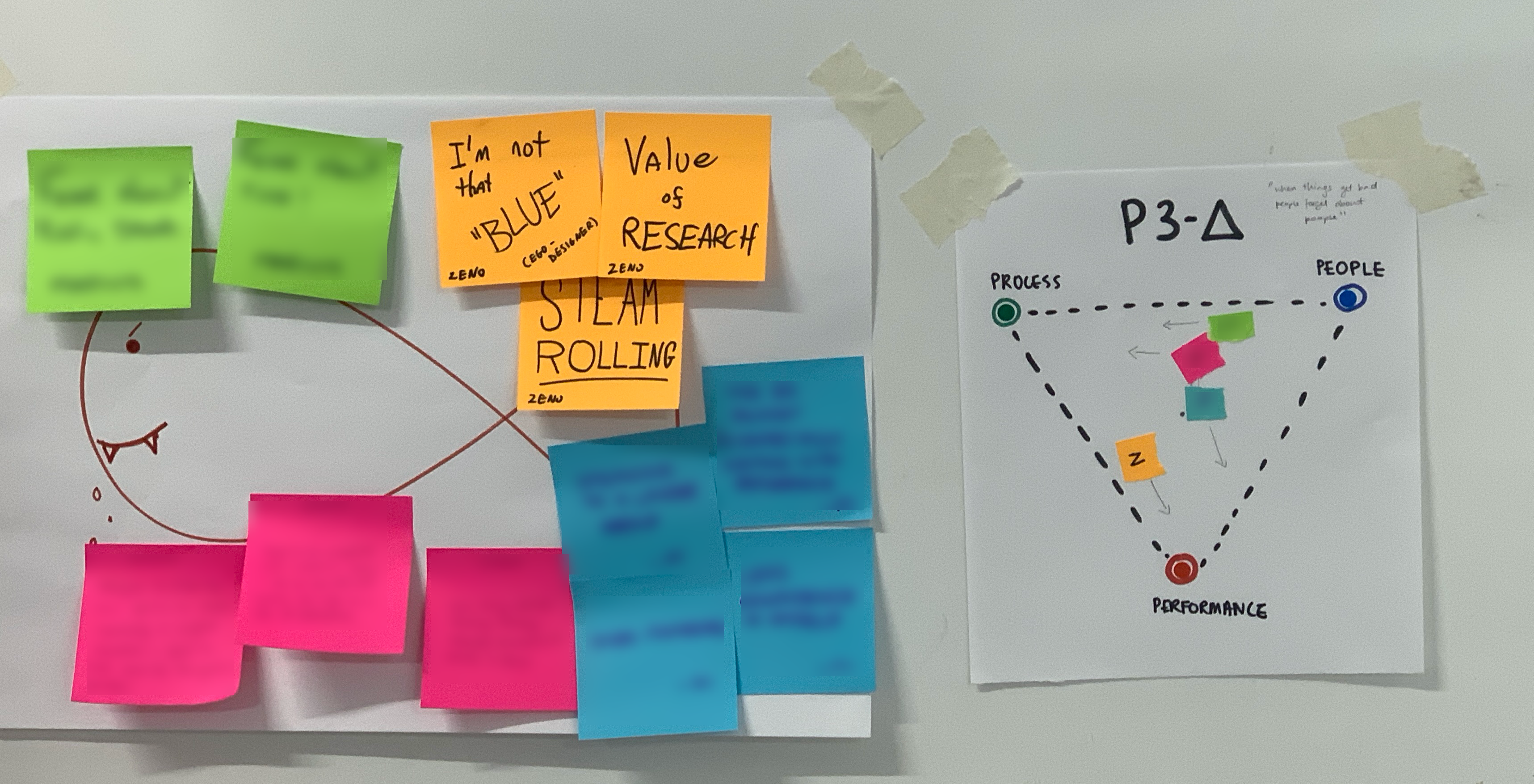
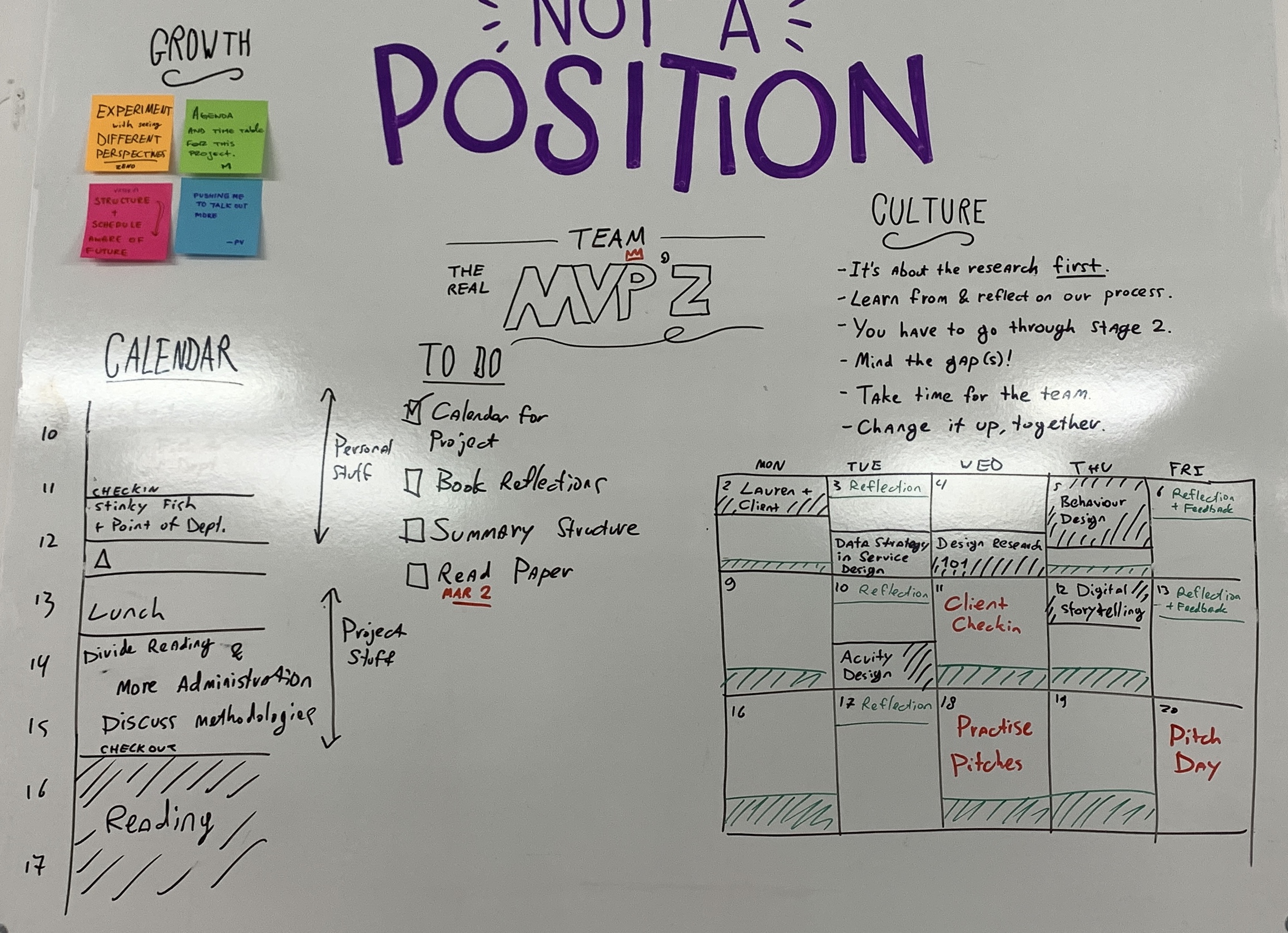
As we were forced remote, we spent quite some time finding that safety online. Instead of being around each other all day, we switched to task-focused calls, and forgot our check-ins. It took us some time to become deliberate about social time again, and we could have experimented with that more.
Balance skill and challenge
In his seminal work, Mihaly Csikszentmihalyi defines (1991) flow state as a positive state of complete absorption with the activity at hand. Flow state requires the task to be not so difficult to be frustrating, and not so easy to be boring. Similarly, groups experience group flow when their skillset matches their challenges (Sawyer, 2015).
This balance can be achieved by stimulating a drive for success in the face of potential failure. This success needs to be encouraged on both a company level (by placing importance on high-quality, timely work (Google, 2019)) and an inter-collegial level (by holding each other accountable (Wheelan, 2010)).
The risk of failure is part of what enables group flow – it heightens the stakes and thus the amount of energy everyone puts in. Every project can be seen as a rehearsal for the next one.
The problem is that most businesses are designed to minimise risk, and most of them punish failure.
As per the previous section, failure should not be punished, but rather encouraged as a necessary step towards success.
In the face of these difficult challenges, teams will need to develop interdependence to solve the problem together (Wheelan, 2010), which will increase team spirit.
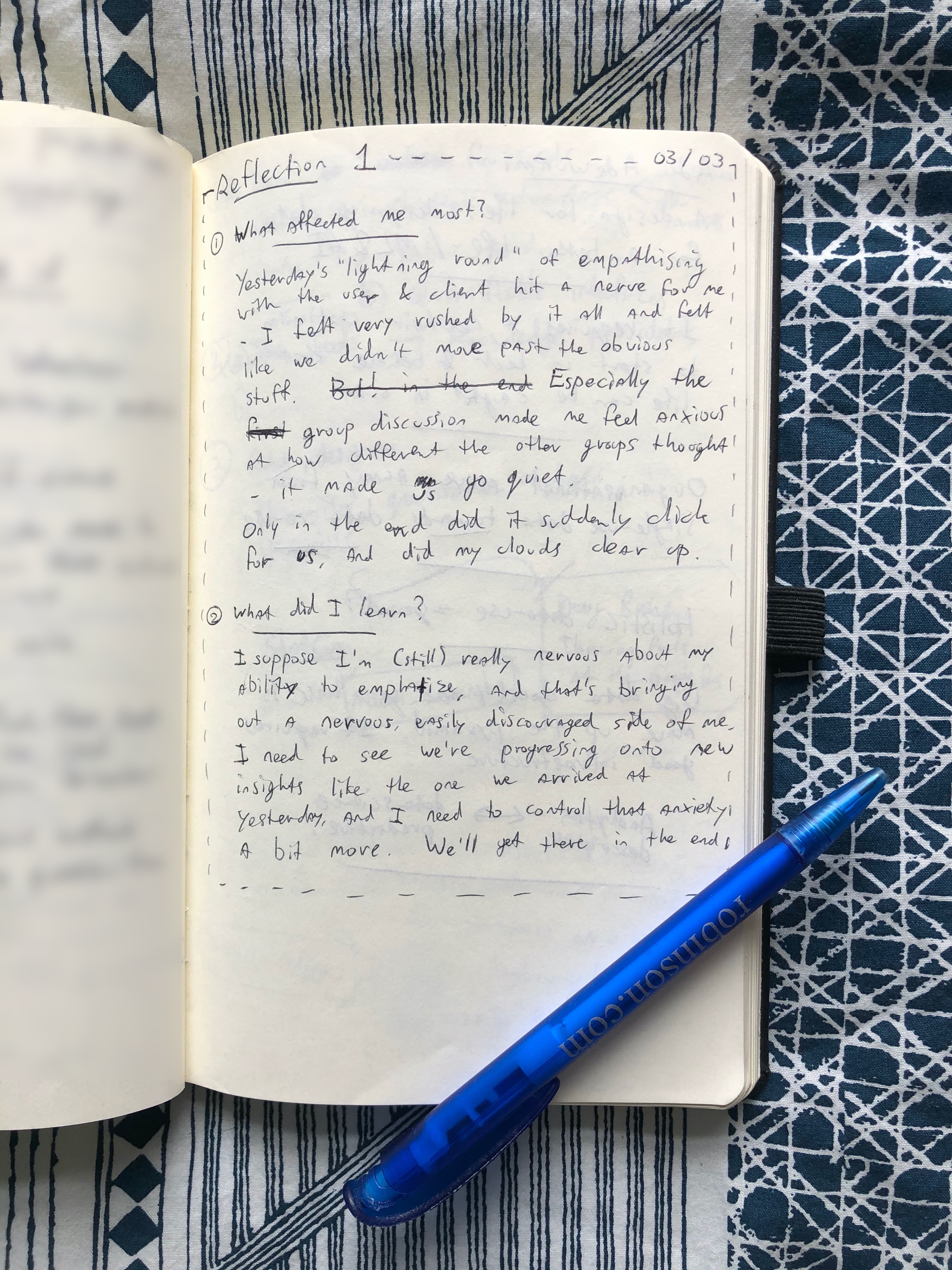
These were great tools that we could have used more throughout the project, as there were moments where we all felt the same frustration but didn't speak up.
![Figure: Our Stinky Fishes ,[object Object],(Other people's information has been blurred out)](/images/pina-stinkyfish.png)
Balance structure and autonomy
A good team knows what they're supposed to do, and has the autonomy to do that in their own way.
According to Wheelan (2010), the most important characteristic of a strong team is that members are clear about the teams' goals, and they agree with them & their relevance. These goals are concretised into daily life through roles and tasks, which groups should be able to set themselves to fit their team dynamic, and are upheld through discussion and planning.
Similar to the previous section, structure and autonomy should be in balance with each other. Some amount of goal setting is needed so that the team can tell if they're getting closer to a solution to the problem (Sawyer, 2015). Heuristics and best practices are good kickstarters of "just enough structure", and have helped companies make their high-level strategy adaptable for teams (Sull and Eisenhardt, 2012).
Over time, structure will lead to familiarity. Wheelan's IMGD (2010) is a testament to this familiarity. It describes four stages teams go through as they figure out shared goals and structure, and become more attuned to each other.
Groups can also become too familiar with each other over time, causing a drop in creative solutions. There's a balance to be struck between structure (which improves performance) and diversity (which improves creativity) (Sawyer, 2015).
Projects at Basecamp go through a process of "shaping" first: management selects ideas and sketches out the rough solution before handing it to a project team, which are then fully responsible for executing it (Singer, 2019).
Similarly, Spotify grants its various teams "aligned autonomy": they are free to define their own goals and methods, so long as they adhere to the overarching company goals (Kniberg, 2014).
![Figure: Spotify's aligned autonomy ,[object Object]](/images/aligned-autonomy.png)
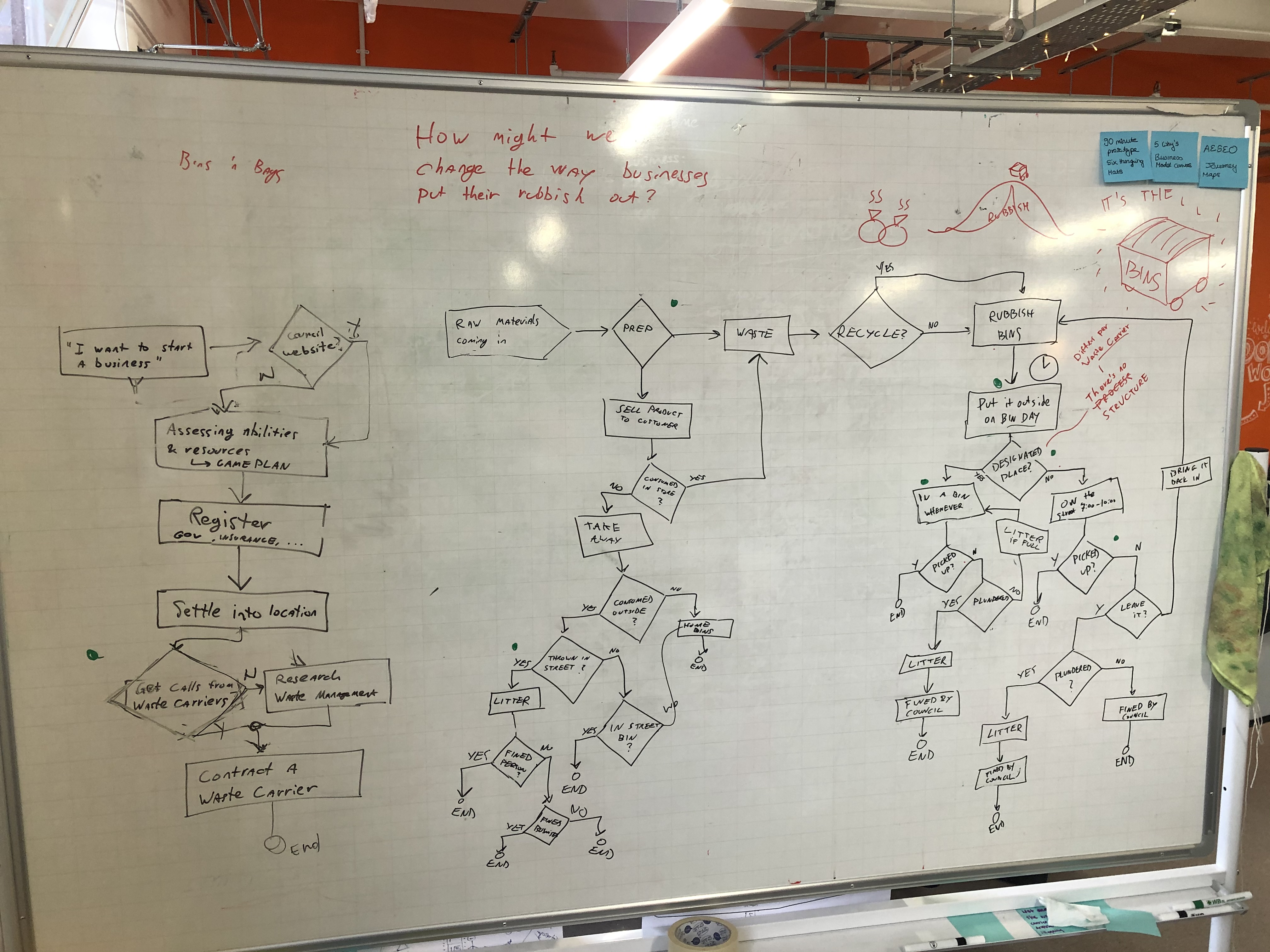
In an effort to shake things up, we decided to go for an inspiration walk around the city, to find the real problem through observation. Within minutes it opened our eyes and we connected dots we hadn't before. After that, we used six thinking hats (De Bono, 1985) to take on different roles and critique our idea. This method allowed us all to step out of our existing team dynamic and think about an idea from all directions. It was refreshing for both the idea and our team process!
Be Present and Dedicated
Groups who are in constant, spontaneous conversation with each other are more likely to build trust, familiarity, and even group flow (Sawyer, 2015). This constant communication requires everyone to be fully present and keep an open mind.
Innovation is blocked when one or more participants already has a preconceived idea of how to get to the goal.
Similarly, there can't be any overpowering voices or silent observers. All participants should be able to participate equally, and not be limited by corporate structure or (lack of) skills. Leaders can be a part of this, but only by participating the same way as everyone else – which is exactly how Wheelan (2010) describes the role of the leader in stage 4 of the IMGD.
Presence and dedication stem from sincere interest and motivation. Team members need to find a sense of purpose in participating, be that financial security, self expression, or something else. On a higher level, the team's goals need to be perceived (by the members) to be important and make a difference (Google, 2019).
Five minutes is not a lot of time, however, and it didn't replenish all the energy needed. We could have combined this with method with more regular energisers and fun sessions in between the serious brainstorming. Time boxing isn't everything, "content boxing" matters too.
![Figure: Miro's built-in timer helped us keep track of pomodoro's. ,[object Object]](/images/uc-pomodoro.png)
![Figure: Starting the day off with a look at the planning kept us present throughout. ,[object Object]](/images/uc-planning.png)
Lead the Way in Many Ways
In a culture of autonomous teams, what's the role of a leader? Well, that differs.
According to Wheelan (2010), leadership should be adaptive: a leader's approach should change when necessary to meet the team's needs. Indeed, Goleman, Boyatzis and McKee define (2013) six distinct emotional intelligence leadership styles, which exemplary leaders switch between on the fly.
![Figure: Leadership becomes more collective as a team progresses through the ,[object Object], stages. ,[object Object]](/images/imgd-leadership.png)
![Figure: Six ,[object Object], leadership styles, to be switched between on the fly. ,[object Object]](/images/leadership-styles.png)
Notably, leaders do not need to be special people with tremendous amounts of skill; instead, the average person of good will, who is flexible and willing to learn some basic skills, can be an effective leader (Wheelan, 2010).
In an effort to distribute the leadership, Unstable Connections established a Day Facilitator, responsible for timing and content. This made everyone own the group process. While it was great, the role sometimes felt meaningless as many decisions were made by the group (which is a good thing!). We could have experimented more with different formats, such as the facilitator leading a brainstorm or lecture, to switch things up.